
A dispute over the leadership of the African Democratic Congress (ADC) has deepened significantly, with sources indicating that senior figures within the party have opened talks with the Nigeria Democratic Congress (NDC) as a contingency option ahead of the 2027 general elections.
At the centre of the crisis is Nafiu Bala Gombe, who served as ADC Deputy National Chairman. Gombe is currently engaged in legal proceedings seeking recognition as the party’s National Chairman, a claim the ADC’s current leadership strongly contests.
According to documents cited, Gombe submitted a resignation letter from his position as Deputy National Chairman on May 17, 2025, stating his intention to “make way for a smooth and effective coalition and restructuring.”
The party subsequently notified the Independent National Electoral Commission (INEC), which acknowledged receipt of the notification.
On July 29, 2025, the ADC held a National Executive Committee (NEC) meeting at the Chelsea Hotel, Abuja, monitored by INEC officials.
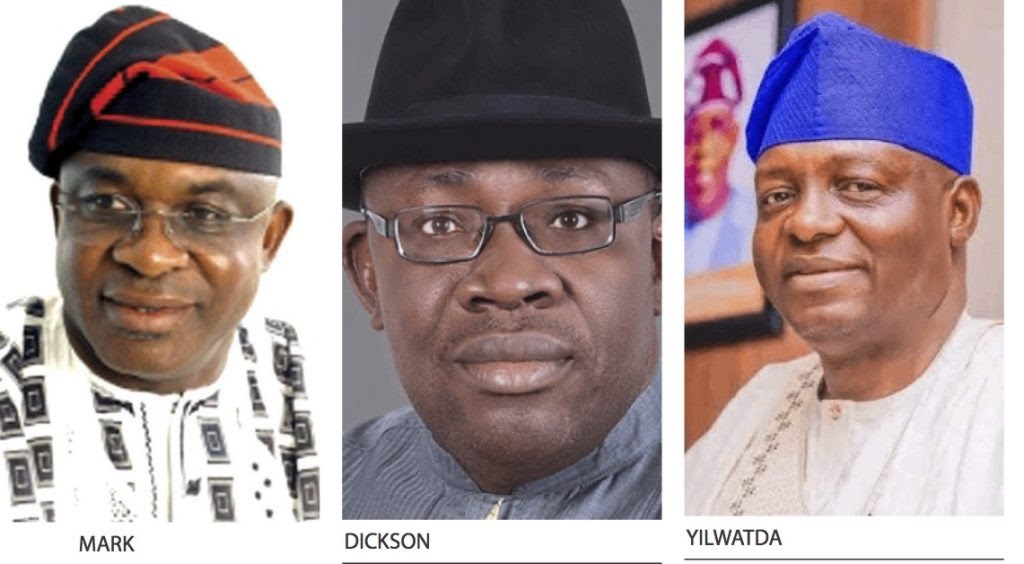
At that meeting, Senator David Mark was ratified as National Chairman and Ogbeni Rauf Aregbesola as National Secretary. INEC subsequently updated its records to reflect the new leadership.
Gombe, whose name appears on the attendance register of that meeting, later filed proceedings at the Federal High Court in Abuja seeking recognition as ADC Chairman.
His legal team has argued that the resignation letter attributed to him was forged, a claim the party disputes, pointing to what it describes as consistent spelling patterns across Gombe’s own public communications over several years.
No criminal complaint or police petition regarding the alleged forgery has been publicly filed to date.
INEC’s position in the matter has drawn scrutiny from both sides. Having deployed monitors to the July 2025 NEC meeting and initially recognised the Mark-Aregbesola leadership, the Commission subsequently issued a statement in April 2026 suspending that recognition, citing a Court of Appeal preservation order obtained by Gombe’s legal representatives.
INEC has also filed an affidavit in court arguing that injunctions cannot apply to completed acts and that party leadership disputes fall outside the scope of judicial interference, citing Supreme Court precedents.
The apparent inconsistency between INEC’s earlier recognition of the new leadership and its subsequent suspension of that recognition has been noted by observers and raised questions that neither the commission nor the courts have yet publicly resolved.
Multiple sources familiar with internal ADC discussions told Saturday Sun that senior party figures have begun exploratory conversations with the NDC, describing the talks as a practical contingency rather than an ideological shift.
“Nobody wants to leave,” one source said, “but nobody is going to sit and watch everything get destroyed.” The sources indicated the discussions have reached an advanced stage.
The NDC’s National Leader, Senator Seriake Dickson, has publicly positioned his party as a platform for politicians affected by the instability in other parties.
“Our party is available for all Nigerians who are now helpless and desirous of a change,” he said, adding that the NDC is also open to “politicians who are stranded as a result of the political developments in the country, who need a platform that is clean and unencumbered with any political crisis.”
Dickson, however, has gone further than simply extending an open invitation. Speaking on the ADC and INEC impasse, he warned against any drift towards a one-party state, cautioning that weakening the opposition would undermine Nigeria’s democratic foundations.
“We are against Nigeria becoming a one-party state. Our country is too large and too diverse for that. There can be no democracy without opposition,” he said.
Dickson also cautioned that even the perception of interference in opposition party affairs could undermine public trust in democratic institutions.
“A threat to one opposition party is a threat to all opposition parties. We stand united to defend Nigeria’s multi-party democracy,” he said.
He specifically urged INEC to maintain strict neutrality, warning that any suggestion of manipulation could trigger a crisis of confidence in electoral institutions.
On allegations that the NDC itself was created to serve the interests of the ruling party, Dickson dismissed the insinuations, saying “I’m used to this kind of bully tactics. I am not someone who is swayed by propaganda and blackmail,” while stressing that “no one can blackmail or bully me or any other Nigerian to belong to a party or form a party.”
The ruling All Progressives Congress (APC) has firmly rejected allegations that it is behind the difficulties facing opposition parties. APC National Publicity Secretary, Felix Morka, stated that “there’s nothing about the crisis within the ADC that has anything to do with the APC, nothing,” describing it as “purely the result of internal dysfunction and the arrogance of the leaders of the ADC.”
APC National Secretary, Ajibola Basiru, also dismissed claims that the ruling party was fuelling crises within opposition parties, insisting that such challenges were self-inflicted.
Basiru noted that Nigeria currently has 19 registered political parties eligible to contest the 2027 elections, and maintained that the President lacks the constitutional authority to deregister political parties or interfere in their internal affairs.
Presidential spokesperson, Sunday Dare, has also echoed this position, maintaining that the APC was not threatened by opposition parties and dismissing claims that the ruling party was orchestrating political instability to weaken its rivals.
“APC is not afraid of anything. The President has a legitimate mandate for four years and has busied himself with the affairs of the nation,” he said.
Dare argued that the democratic space remained open, pointing to the freedom of opposition figures to approach INEC and make public statements as evidence.
The ADC’s own National Publicity Secretary, Bolaji Abdullahi, has taken a different view. He directly accused the ruling party of being behind the instability, alleging a deliberate strategy to eliminate credible challengers ahead of the next election cycle and warning that Nigeria risks sliding into a one-party state if opposition parties are continually weakened.
The APC has not responded to those specific allegations beyond its general denials. The timing carries significant implications. ADC party primaries are scheduled before the end of the month. If the leadership question remains unresolved by then, the party may face legal and procedural complications in conducting those primaries, potentially undermining its preparations for the 2027 elections at a critical moment.
The ADC has, over the past several months, attracted a number of prominent political figures and built what supporters describe as a broad national structure. A large-scale departure of key figures to the NDC, driven by the unresolved dispute rather than strategic realignment, could materially affect the party’s standing as an opposition platform, some have argued.
The outcome of the crisis is likely to be shaped by developments in the courts and at INEC in the coming days. Both Gombe’s legal team and the current ADC leadership have maintained their respective positions, and no mediated resolution has been publicly announced.