
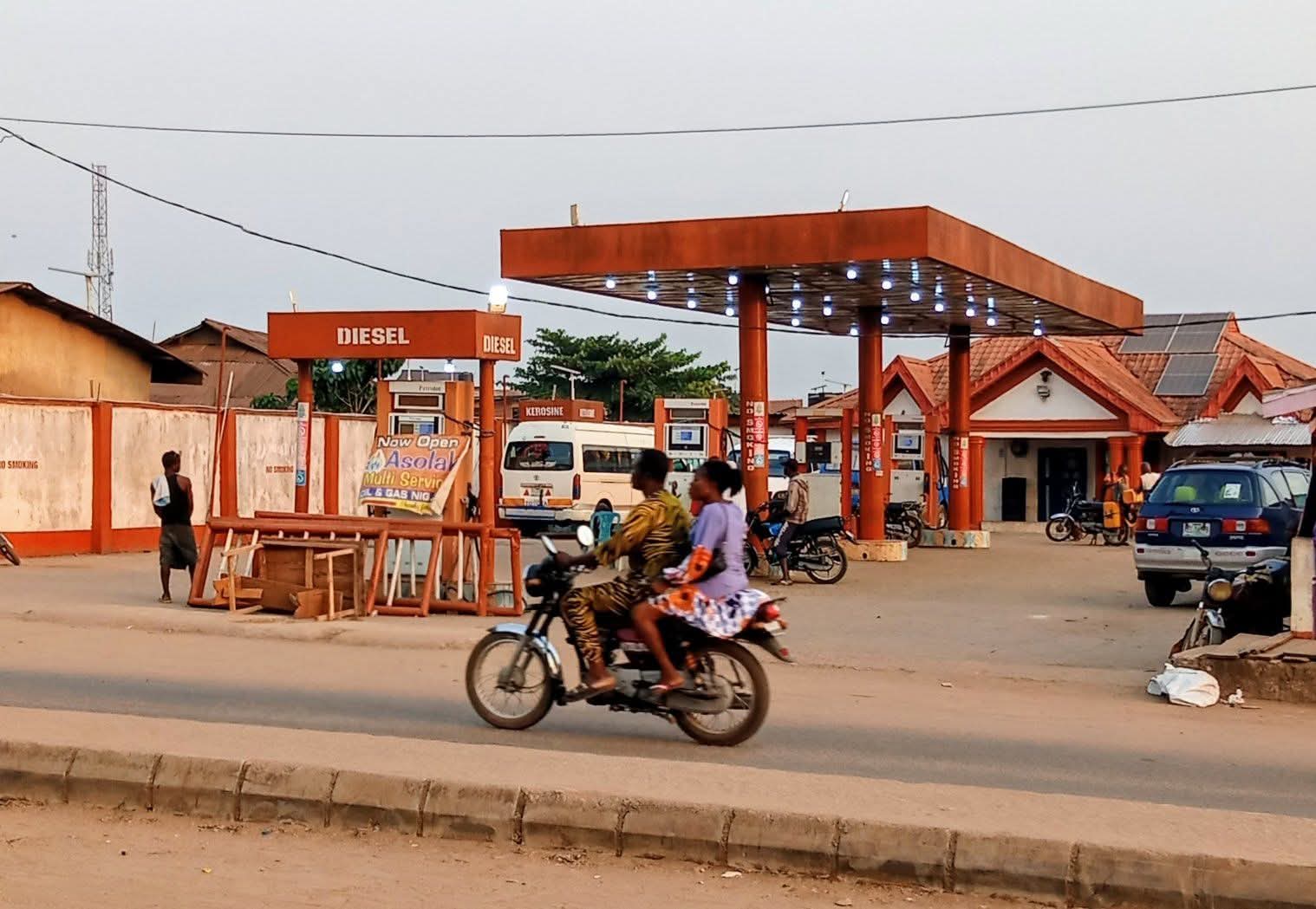
Petrol prices reached N1,250 per litre in Lagos on Monday, driven by supply issues arising from the Middle East conflict, prompting complaints from motorists and commuters.
The price increase at filling stations followed the Dangote Petroleum Refinery again increasing the price of petrol, the third upward adjustment within a week.
Dangote Refinery announced the price hike to marketers on Monday, raising the gantry price of Premium Motor Spirit (PMS), also called petrol, to N1,175 per litre from N995 per litre announced on Friday.
This represents an increase of N180, or about 18.1 per cent, within three days.
The refinery equally revised the gantry price of Automotive Gas Oil (AGO), commonly known as diesel, to N1,620 per litre.
The price increase stems from the Israel-Iran tensions and Houthi activities in the Red Sea, which have rerouted oil tankers and raised shipping costs by about 40 per cent, based on Baltic Exchange figures.
Brent crude hit $98.96 per barrel, while the naira traded at N1,650 to the dollar.
Nigeria imports much of its refined fuel despite Dangote Refinery’s output. A refinery spokesperson attributed the adjustment to higher feedstock and logistics costs.
Recently, the refinery increased its PMS price to N995 per litre, up from N874 at the weekend, a hike that has pushed fuel pump prices above N1,000 per litre nationwide.
The adjustment has raised transportation fares in parts of the country.
In Nigeria, the development has triggered an immediate rise in petrol prices, with PMS now selling for about N1,175 per litre at Dangote Refinery, while Pinnacle reportedly sells at about N1,200 per litre.
Following the increment, petrol prices at filling stations have climbed to between N1,200 and N1,250 per litre depending on location.
MRS sells at about N1,250 per litre, Matrix Petroleum at N1,250 per litre, while AP sells at around N1,200 per litre.
In Abuja, LEADERSHIP’s checks showed that the ex-depot price increase was yet to reflect in pump prices at the time of filing this report.
For instance, at the NNPC Limited station at Aleta, opposite Shoprite along Airport Road in Lugbe, petrol was selling at N1,081 per litre, with no queue observed at the time of the visit.
Another NNPC station in Kubwa, Abuja, also confirmed that petrol was sold at N1,081 per litre.
At the TotalEnergies filling station located inside the Federal Housing Authority Estate in Lugbe, petrol was sold at N1,075 per litre. However, a normal queue of vehicles was observed at the station.
Meanwhile, the MRS Oil Nigeria Plc station in Lugbe was not dispensing fuel at the time of the visit.
Attendants said the station had earlier sold petrol at about N1,100 per litre in the afternoon, but sales had stopped for the day.
The price adjustments coincided with a rally in international crude oil benchmarks. As of 1:00 pm WAT, Brent crude was trading at about $102.8 per barrel, up 10.9 per cent, while West Texas Intermediate crude stood at around $101.0 per barrel, up 11.1 per cent.
Market participants said pricing decisions by the Dangote refinery often set the tone for depot prices across major fuel distribution hubs in Nigeria.
Marketers are therefore expected to adjust their pricing strategies in response to the new gantry rates.
Analysts warned that the development could trigger a ripple effect across the downstream sector, as depot operators and fuel marketers recalibrate supply costs in line with the revised prices announced by the country’s largest refining facility.
The latest increase has pushed transportation costs up by about 20 per cent in parts of Lagos and Ogun States.
For instance, transport fare from Oju-Ore in Ota, Ogun State, to Agege in Lagos has increased from N1,000 to N1,200, while the fare from Ikeja to Oshodi has risen from N300 to N500.
Commuters have expressed frustration over the fare hikes, noting that the increase has forced them to spend more on daily transportation as motorists adjust prices.
Speaking, a commuter on the Oju-Ore to Agege route, Idris Akanni, complained that he might be forced to walk to his destination as the sudden increment caught him unaware.
According to Akanni, his return fare has increased by over 20 per cent even though his income has remained the same.
“I am currently stranded and do not know how I will get to my destination. I have spent over 20 per cent above my daily transport fare. I just hope transportation to my house will not be like what I experienced in Lagos.”
Also speaking, a teacher in a government-owned secondary school in Lagos, Akinlabi Olajide, called for the reintroduction of subsidy by the government.
He argued that since the government is earning more revenue from crude oil sales, it should subsidise petroleum products to cushion the effect on Nigerians and help curb inflation.
“Now, government has so much money from crude sales; they should subsidise that by creating buffers for the citizens,” he stated.
The Federal Government has said it is closely monitoring the impact of the escalating crisis in the Middle East on Nigeria’s economy, particularly the rising cost of petrol in the domestic market.
The media aide to the Minister of Finance and Coordinating Minister of the Economy, Mr Wale Edun, Dr Ogho Okiti, disclosed this in response to enquiries by LEADERSHIP on the policy options being considered by the government as global oil market tensions intensify.
Okiti said the government was carefully studying developments in the region and their possible implications for Nigeria’s energy prices and broader economic stability.
“As a responsible government, we continue to monitor the impact of the growing crisis in the Middle East on the Nigerian economy and Nigerians,” he said.
Global oil prices have been under pressure in recent weeks following heightened geopolitical tensions in the region, particularly the ongoing war involving Iran, which has raised concerns about possible disruptions to crude supply and shipping routes.
The development has contributed to volatility in international crude markets and has also pushed up the cost of refined petroleum products in several countries, including Nigeria, which relies heavily on imported fuel despite being a major crude oil producer.
Okiti noted that the Federal Government was examining a range of policy responses that could help cushion the impact of the external shock on Nigerians.
“This means that the government is looking at different policy options. We will be able to share them when we have a firm direction,” he added.
His remarks suggest that economic managers are evaluating possible interventions to address the pressure on fuel prices while balancing fiscal realities following the removal of petrol subsidy in 2023.
The Federal Government has repeatedly emphasised the need to strengthen domestic refining capacity and diversify energy sources as part of efforts to reduce vulnerability to external shocks in the global oil market.
The Petroleum Products Retail Outlets Owners Association of Nigeria (PETROAN) has warned that petrol prices could surge to nearly N2,000 per litre if current trends persist.
This follows Dangote Refinery and Petrochemicals’ hike in the price of Premium Motor Spirit (PMS) to N1,175 per litre from N995 on Monday.
PETROAN urged the Nigerian National Petroleum Company Limited (NNPC Ltd) to urgently boost domestic refining capacity to insulate Nigeria from global petroleum market shocks.
PETROAN president, Dr Billy Gillis-Harry, said: “PMS could rise close to N2,000 per litre while AGO may approach N3,000 per litre if the situation persists.”
PETROAN specifically called on NNPC Group CEO Engr Bayo Ojulari to restart production at local refineries, including the Area 5 Plant at Port Harcourt and the Warri Refinery, which operated briefly before shutting down for profitability assessments.
Dr Harry linked the volatility to the Israel-US-Iran conflict, with drone and missile attacks disrupting oil routes and supply chains. Before the crisis, he noted, petrol sold at N774 per litre (now over N1,000, up 30 per cent) and diesel (AGO) at N950 (now N1,400+, up 49 per cent).
He stressed the need to rehabilitate government refineries to leverage Nigeria’s crude reserves under NNPC custody, making them less vulnerable than import-reliant private ones.
Continued hikes, he warned, would fuel inflation, job losses, economic hardship, higher transport costs and pricier goods—PMS powers daily mobility, while AGO powers industry.
Dr Harry lauded President Bola Ahmed Tinubu’s oil and gas reforms, urging him to order immediate refinery restarts for citizen relief and economic stimulus.
However, analysts have warned that while Nigeria may benefit from higher crude oil prices in the short term, the domestic economy—particularly the manufacturing sector—could face severe cost pressures driven by expensive energy.
The analysts noted that the unfolding geopolitical crisis could add another layer of pressure to an already fragile production environment.
They argued that Nigerian manufacturers are already grappling with rising fuel and logistics costs.
Speaking to LEADERSHIP, the chief executive officer of the Centre for the Promotion of Private Enterprise (CPPE) warned that geopolitical tensions in the Middle East typically trigger volatility in global oil prices, especially because the Strait of Hormuz handles about 20 per cent of global crude oil shipments daily.
According to Yusuf, any disruption or perceived risk to the strategic shipping corridor immediately pushes up oil prices, shipping costs and insurance premiums globally.
While higher oil prices could boost Nigeria’s export earnings and government revenues, manufacturers at home are already grappling with the downside of the energy shock.
“Nigeria operates a deregulated downstream petroleum regime. Higher international crude prices feed directly into higher petrol, diesel and aviation fuel costs,” Yusuf said.
For manufacturers, the implication is immediate and severe. Most factories rely heavily on diesel to power production due to persistent electricity supply challenges. As diesel prices rise in response to global oil market volatility, production costs increase sharply.
Industry operators say energy already accounts for a significant share of manufacturing costs in Nigeria, sometimes exceeding 30 to 40 per cent for energy-intensive industries such as cement, food processing, plastics, steel and chemicals.
The CPPE warned that higher energy prices will trigger a chain reaction across the economy.
Rising diesel and petrol prices will increase transportation and logistics costs, pushing up the cost of moving raw materials to factories and finished goods to markets. Food distribution expenses are also expected to climb, further worsening inflationary pressures.
As manufacturers absorb higher energy and logistics costs, profit margins are likely to shrink, forcing many firms to increase product prices or scale down production. Yusuf noted that sectors such as manufacturing, aviation, logistics and consumer goods could face margin compression as operating expenses escalate.
“With purchasing power already fragile, sustained increases in fuel prices could intensify cost-of-living pressures and deepen poverty levels,” he warned.
The situation presents a paradox for Nigeria. While higher crude oil prices may increase foreign exchange inflows, strengthen external reserves and boost government revenues, the same development could worsen inflation and erode household welfare.
CPPE also pointed out that Nigeria may not fully maximise the revenue gains from higher oil prices due to production constraints. The country’s crude output currently fluctuates between about 1.4 million and 1.6 million barrels per day—below installed capacity—largely due to oil theft, pipeline vandalism and underinvestment in upstream infrastructure.
Beyond the energy cost shock, the conflict could also trigger broader global economic risks, including rising shipping insurance premiums, supply chain disruptions and capital flight from emerging markets.
To mitigate the economic impact, CPPE called on the government to strengthen oil production capacity, build fiscal buffers from any windfall revenue and accelerate domestic refining capacity to reduce reliance on imported petroleum products.
The organisation also urged authorities to sustain reforms in the foreign exchange market, implement targeted social protection for vulnerable households and fast-track economic diversification.
“The Iran-U.S.-Israel conflict represents a classic double-edged shock for Nigeria..
“Higher oil prices may strengthen fiscal balances in the short term, but inflationary pressures and rising production costs pose significant risks to businesses and household welfare,” Yusuf said.
We’ve got the edge. Get real-time reports, breaking scoops, and exclusive angles delivered straight to your phone. Don’t settle for stale news. Join LEADERSHIP NEWS on WhatsApp for 24/7 updates →
Source: Leadership