

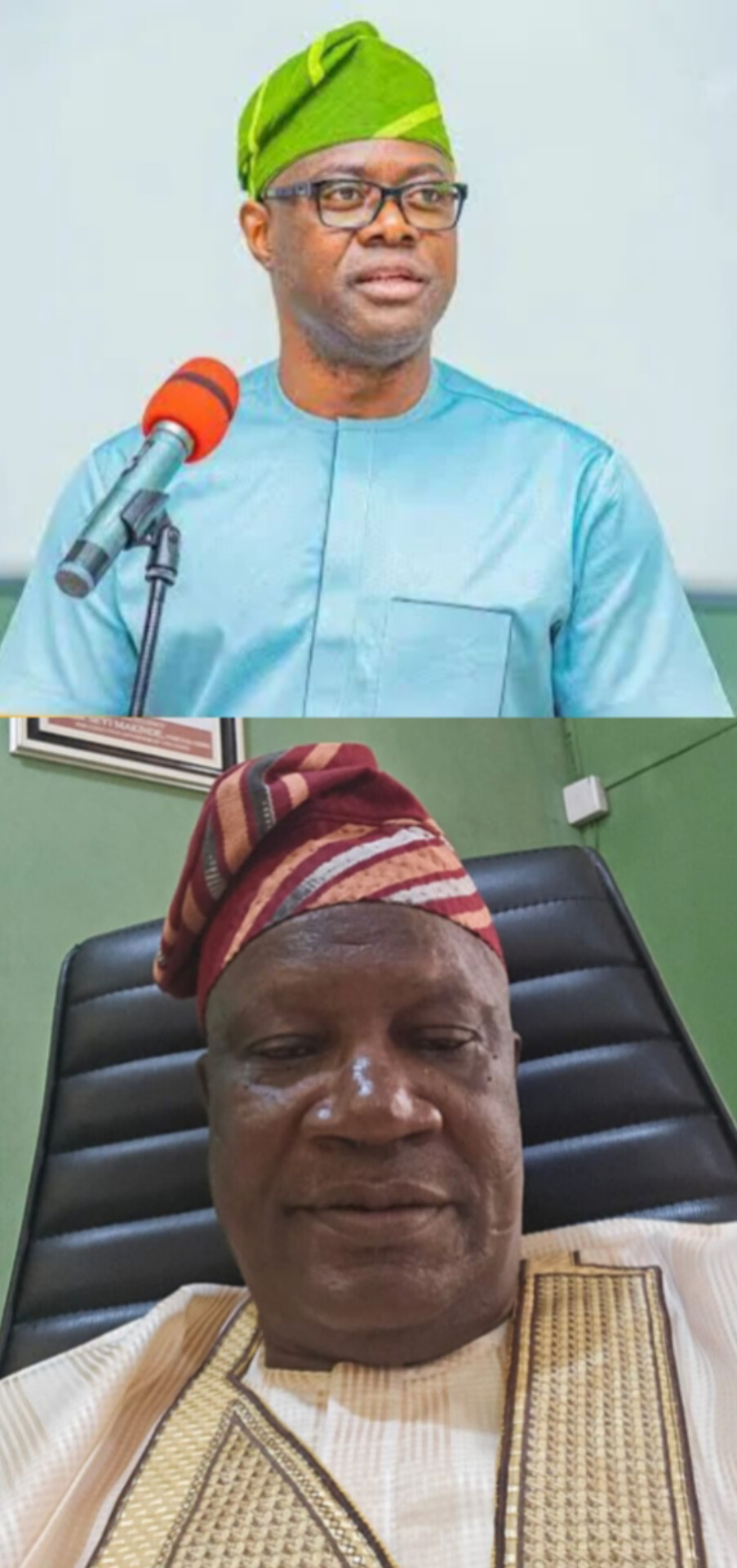
By Salam Abdrahman
A call has been made for the establishment of a multi-campus university system in Oke-Ogun, Oyo State, following Governor Seyi Makinde’s announcement on the proposed autonomy of the Iseyin Campus of Ladoke Akintola University of Technology (LAUTECH), Ogbomoso.
The proposal, put forward by Hon. Adekunle Tunji Rafiu (JP) obtained by 𝗜𝗧𝗩 𝗢𝗻𝗹𝗶𝗻𝗲 , seeks to expand access to higher education, promote regional development and ensure equitable distribution of educational institutions across the 10 local government areas in Oke-Ogun.
Adekunle, who was a fmr. Minority leader of Oyo State House of Assembly commended Governor Makinde for his commitment to educational development, also acknowledged the contribution of the President of the Oke-Ogun Development Consultative Forum, Alhaji Ahmed Raji, SAN, in drawing the governor’s attention to the matter.
Governor Makinde, on October 15, 2026, announced that the process towards granting autonomy to the Iseyin Campus would involve engagement with the National Universities Commission (NUC) and a sustainability study.
Reacting to the development, the Saki born politician ,described the announcement as an opportunity to reposition Oke-Ogun through strategic investment in education, employment generation and socio-economic advancement.
He recalled the role played by Michael Adeniyi Koleosho Polytechnic, Saki, in the development of tertiary education in the region, noting that the LAUTECH Iseyin Campus had further expanded educational opportunities.
According to him, the proposed autonomy of the Iseyin Campus should serve as a foundation for a broader regional educational development plan.
He, therefore, urged the Oyo State Government, relevant legislative authorities and other stakeholders to consider a multi-campus university model, drawing lessons from the structure and operations of Osun State University.
Adekunle said the proposed institution should offer a broad range of academic disciplines rather than concentrate exclusively on agriculture.
He listed Law, Medicine and Health Sciences, Engineering, Agriculture, Science and Technology among the fields that should be considered.
He also advocated an equitable distribution of campuses and faculties, with particular consideration for federal constituencies and communities without existing higher educational institutions.
He, however, stressed that the location of campuses and the allocation of faculties should be determined by feasibility studies, transparent criteria and the necessary regulatory approvals.
On regional participation, Rafiu said the 10 local governments in Oke-Ogun — Iseyin, Saki West, Saki East, Atisbo, Kajola, Itesiwaju, Iwajowa, Oorelope, Irepo and Olorunsogo — should be actively involved in consultations, planning, infrastructure assessment and community mobilisation.
He said each local government should identify its educational needs and development opportunities, adding that the process should promote regional inclusion rather than competition over campus locations.
Rafiu also proposed equal participation by the local governments in contributions towards the initiative, including land, funding, infrastructure and other resources.
On the legal framework, he called for the founding legislation of any proposed university to clearly define its multi-campus structure, academic mandate, campus distribution, governance arrangements, sustainable funding mechanisms and accountability provisions.
He further proposed the establishment of a representative Oke-Ogun University Development Committee to assess the region’s educational needs, examine the proposed autonomy of the LAUTECH Iseyin Campus, identify suitable locations and recommend a financially sustainable implementation plan.
According to him, the relationship between an autonomous institution emerging from the Iseyin Campus and any proposed multi-campus university must be carefully examined to prevent duplication of functions and ensure legal clarity.
Rafiu called on Governor Makinde, lawmakers, traditional rulers, community leaders, private organisations and other stakeholders to work towards a coordinated educational development agenda for the region.
He said the opportunity presented by the proposed autonomy of the Iseyin Campus should unite the people of Oke-Ogun and not create divisions among communities.
“Our common objective must be to expand access to quality higher education and create lasting opportunities for our young people,” he said.