

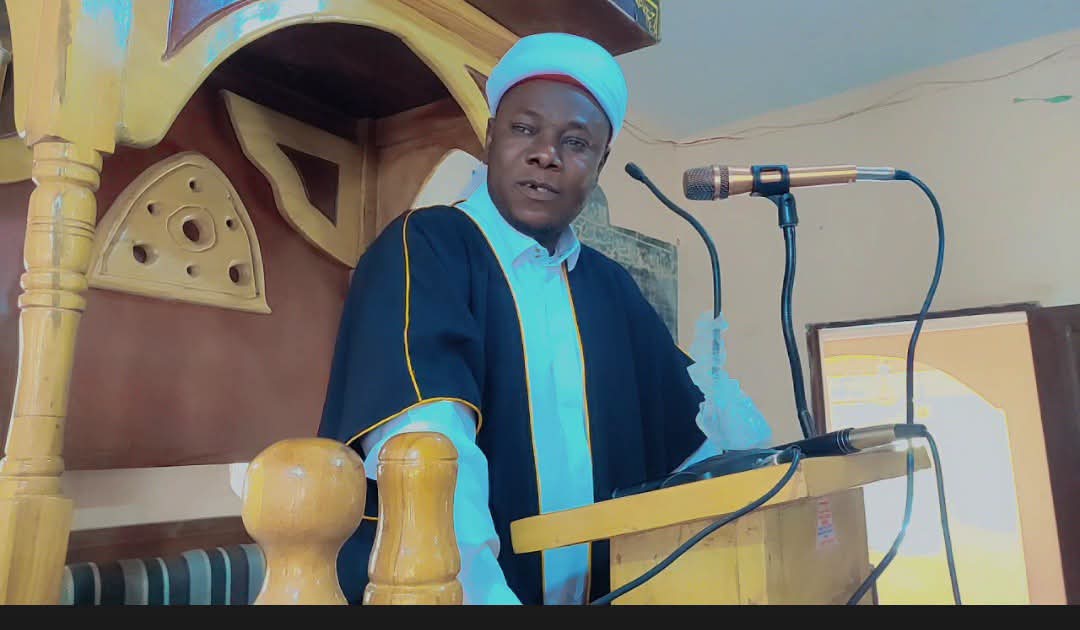
An Islamic preacher and lecturer, Imam Abdazeez Megida, has urged Muslims to uphold honesty, justice, humility and other noble virtues, warning that religious devotion without good character contradicts the teachings of Prophet Muhammad.
Megida, while delivering a sermon today in Saki on noble character, said Muslims should demonstrate the values of Islam through their conduct, relationships and treatment of others rather than merely professing faith.
He cited the Prophet’s reported statement, “I was sent only to perfect noble character,” as a reminder that good conduct occupies a central position in Islamic teachings.
The Islamic preacher noted that Allah described Prophet Muhammad in the Quran as possessing an exalted standard of moral character, stressing that Muslims should emulate the Prophet’s exemplary lifestyle.
He expressed concern over what he described as the contradiction between religious profession and immoral conduct, listing oppression, hypocrisy, dishonesty, disobedience to parents, harming neighbours, murder and alcohol abuse among behaviours inconsistent with Islamic teachings.
According to him, Muslims must recognise that religious identity alone does not guarantee moral uprightness, adding that genuine faith should be reflected in righteousness, compassion and respect for others.
Megida also referenced Quranic passages condemning wrongdoing, injustice and illicit gains, while questioning the failure of religious leaders to consistently challenge misconduct and promote righteousness within their communities.
He urged Islamic scholars and other religious authorities to strengthen their efforts to encourage good deeds and discourage evil, saying their responsibilities extend beyond preaching to demonstrating the values they teach.
The preacher further cited Quranic injunctions on prayer, justice, kindness and the avoidance of indecency and oppression, arguing that religious observances should translate into positive behaviour.
He lamented that people of different religious backgrounds sometimes demonstrate virtues that Muslims ought to exemplify, urging the faithful to reconsider their attitudes towards honesty, accountability and peaceful coexistence.
Highlighting the attributes of noble character, Megida listed truthfulness in speech, fulfilling promises, giving to those in need, honouring parents, rewarding people for their services, keeping trusts, maintaining family ties, protecting companions, honouring guests and modesty.
He said these virtues should guide Muslims in their dealings with family members, neighbours, colleagues and the wider society.
The Islamic preacher also recounted an account involving a captive woman from the Tayy tribe who appealed to Prophet Muhammad for her release, identifying herself as the daughter of Hatim al-Ta’i, a renowned Arab figure associated with generosity and hospitality.
According to the account, the woman appealed to the Prophet based on her father’s reputation for protecting honour, freeing captives, feeding the hungry, welcoming guests and assisting people in need.
The Prophet subsequently ordered her release, acknowledging her father’s love for noble character.
Drawing lessons from the account, Megida said good character could preserve a person’s reputation and benefit their children long after their parents’ death.
He urged parents, particularly mothers, to raise their children with sound moral values, stressing that honesty, generosity, respect and compassion are enduring legacies that can open doors of goodwill for future generations.
Megida also illustrated the lasting impact of good deeds with a story about a man who visited a restaurant in Egypt and was told that his father had already paid for his meal, with the understanding that he would, in turn, provide for his own children.
He used the account to emphasise the intergenerational value of responsible conduct and the importance of investing in the moral upbringing of children.
The preacher called on Muslims to make noble character a defining feature of their lives, stressing that good conduct should remain evident in their public and private dealings.