

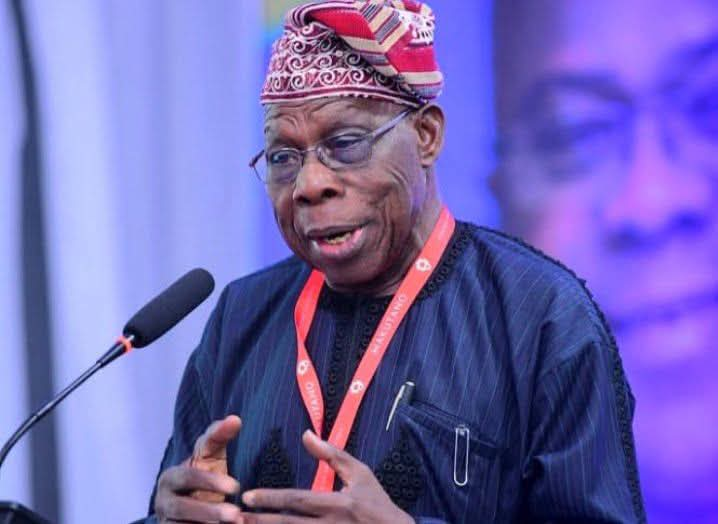
The saying that a people who fail to learn from history are destined to repeat its mistakes remains relevant to Nigeria’s political history. A retrospective examination of former President Olusegun Obasanjo’s political relationship with the South-West, particularly his dealings with prominent Yoruba personalities, raises questions that deserve critical examination.
From the compulsory retirement of Major General Olufemi Olutoye in 1977 to the political disagreements surrounding the 2027 presidential election, Obasanjo’s political decisions and public interventions have continued to attract divergent interpretations.
For his critics, the pattern suggests a longstanding disconnect between his political choices and the collective interests of his Yoruba kinsmen. His supporters, however, may argue that his decisions were guided by national considerations rather than ethnic sentiments.
Nevertheless, certain historical episodes provide useful grounds for examining the controversy.
OLUTOYE’S RETIREMENT: THE 1977 CONTROVERSY
Who is Major General Olufemi Olutoye?
The Alani of Ido-Ani, Oba Olufemi Olutoye, is a distinguished military officer and traditional ruler whose career traversed the military, academia and traditional institutions.
He attended Government College, Ibadan, in 1945, gained admission to the University of Ibadan in 1950 and graduated in June 1954. He also attended Cambridge University and became one of the early university graduates to join the Nigerian Army.
His family has equally distinguished itself in different fields. His son, Professor Oluyinka Olutoye, is an internationally renowned surgeon in the United States, celebrated for his groundbreaking surgical work involving a baby operated on while still in its mother’s womb.
In 1977, Olutoye served as Federal Commissioner for Youth, Sports and Social Development under the military administration of General Olusegun Obasanjo.
According to the account contained in Obasanjo’s book, *Just Before Dawn*, Olutoye reportedly approached the Head of State to draw his attention to the need for equitable distribution of federal projects and amenities, particularly in the South-West.
The account further states that Obasanjo challenged him to repeat his position in the presence of his second-in-command, Brigadier Shehu Yar’Adua.
Olutoye reportedly reiterated his position, only to hear later that day that he had been compulsorily retired from the Army.
The circumstances surrounding his retirement have consequently remained a subject of controversy, particularly among those who believe that his intervention was motivated by genuine concerns about the development of his region.
The incident raises an important question: was Olutoye’s position an act of insubordination, or was he simply advocating equitable development for his people?
1979: THE AW0LOWO-SHAGARI PRESIDENTIAL CONTEST
Another episode frequently cited by Obasanjo’s critics is the political transition that culminated in the emergence of Alhaji Shehu Shagari as Nigeria’s President in 1979.
Chief Obafemi Awolowo, regarded by many as one of Nigeria’s most intellectually prepared political leaders, contested the presidential election on the platform of the Unity Party of Nigeria (UPN).
Awolowo had established a reputation for his developmental philosophy, particularly in education, healthcare and social welfare.
However, Shagari of the National Party of Nigeria (NPN) emerged victorious.
Obasanjo, who handed over power to the civilian administration, has remained a controversial figure in discussions surrounding the political circumstances of that transition.
For critics who believe that Awolowo deserved a better political outcome, the episode represents one of the defining moments in the complicated relationship between Obasanjo and Yoruba political interests.
1999–2007: EIGHT YEARS OF OBASANJO’S CIVILIAN PRESIDENCY
When Obasanjo returned to power as an elected President in 1999, expectations were high across the South-West, particularly because he was a prominent son of the region.
However, his eight-year administration has continued to attract criticism over the distribution of federal institutions and development projects.
One of the major arguments advanced by his critics is that the South-West did not receive sufficient federal university establishments during his presidency.
The Federal Medical Centre, Owo, often mentioned in discussions about federal projects in the region, predates his administration.
Historical records indicate that the facility originated as an Ondo State Government institution before its takeover by the Federal Government in 1989. It subsequently attained Federal Medical Centre status, with its pioneer board appointed in June 1993.
Similarly, the Federal Medical Centre, Ido-Ekiti, had been approved before Obasanjo assumed office in 1999.
These historical developments have been cited by those who argue that the former President did not establish a sufficiently impressive record of new federal tertiary institutions in the South-West during his eight years in office.
In contrast, President Bola Ahmed Tinubu’s administration has announced and supported the establishment or upgrading of several federal tertiary institutions in the region.
Among the institutions cited in this regard are:
– Federal University of Technology and Environmental Studies, Iyin-Ekiti, established in 2025.
– Federal University of Agriculture and Developmental Studies, Iragbiji, Osun State, established in 2025.
– Tai Solarin Federal University of Education, Ijagun, Ijebu-Ode, upgraded in 2025.
– Federal College of Education, Ilawe-Ekiti.
– Federal College of Education, Iwo, Osun State.
The comparison has become an important part of the argument by those who believe that Tinubu’s administration is paying greater attention to the educational and institutional development of the South-West.
However, the establishment of institutions alone should not be the sole measure of governmental performance. Their funding, operational capacity, accessibility and long-term contribution to national development are equally important considerations.
OBASANJO AND THE CONTROVERSIAL 2003 AND 2007 ELECTIONS
Obasanjo’s political legacy is also inseparable from the controversies surrounding the 2003 and 2007 general elections.
In 2003, the South-West became a major political battleground as the ruling Peoples Democratic Party (PDP) sought to dislodge the Alliance for Democracy (AD) from its traditional strongholds.
The elections were widely criticised by opposition parties and observers, with allegations of electoral manipulation and irregularities dominating the political atmosphere.
The controversy was particularly significant because Obasanjo, a Yoruba man, was the President under whose administration the PDP made substantial inroads into the South-West at the expense of the AD.
The 2007 general election equally attracted widespread criticism.
The late President Umaru Musa Yar’Adua, who succeeded Obasanjo, publicly acknowledged that the election that brought him to power had serious shortcomings and promised electoral reforms.
For many political observers, these developments remain a significant indictment of the electoral environment under Obasanjo’s administration.
Meanwhile, Bola Tinubu’s political and legal battles against the alleged manipulation of electoral outcomes in the South-West contributed to the struggle to preserve opposition political control in the region.
The legal challenges surrounding electoral outcomes in states such as Ekiti, Ondo, Osun and Edo became defining moments in Nigeria’s democratic development.
### THE 2023 ISEYIN INCIDENT: OBASANJO AND YORUBA TRADITIONAL RULERS
Perhaps one of the most controversial episodes involving Obasanjo and Yoruba traditional institutions occurred on September 15, 2023, in Iseyin, Oyo State.
The occasion was the commissioning of the College of Agricultural Sciences at Ladoke Akintola University of Technology (LAUTECH), Iseyin.
During the event, Obasanjo reportedly took the microphone and directed traditional rulers present to stand up and subsequently sit down.
His remarks, delivered partly in Yoruba, included the expression, “Eyin Kabiyesi, e dide! E joko!”
The incident generated considerable controversy, with some traditional leaders and members of the public expressing reservations about the manner in which the former President addressed the royal fathers.
Critics argued that the incident was inconsistent with the cultural reverence traditionally accorded Yoruba monarchs, who are regarded as custodians of their communities’ heritage and institutions.
Obasanjo reportedly explained his intervention within the context of the need for the traditional rulers to accord the governor the respect due to his office.
However, the controversy raised a broader question about the relationship between political authority and traditional institutions.
Should the presence of a sitting governor determine the manner in which traditional rulers are addressed at a public function?
The incident remains a subject of debate concerning protocol, cultural sensitivity and the dignity of traditional institutions.
THE 2027 POLITICAL CONTEST AND THE OBASANJO QUESTION
As Nigeria approaches the 2027 general election, Obasanjo’s political interventions and his position on the emerging political realignments have again attracted attention.
President Tinubu, who hails from the South-West, is seeking another mandate amid economic challenges, political disagreements and growing debates about the direction of the country.
Obasanjo, on the other hand, has remained an influential voice in national political discourse and has been associated with conversations around opposition cooperation and alternative political arrangements.
His critics see his present political posture as another manifestation of a longstanding disagreement with the political interests represented by Tinubu.
They argue that a former President who had eight years to demonstrate his commitment to the development of the South-West should be more circumspect in his criticism of a successor whose administration is establishing new federal institutions in the region.
However, the argument should not be reduced to ethnic loyalty alone. Every administration must be subjected to scrutiny, irrespective of the president’s region of origin.
Obasanjo’s political record, just like Tinubu’s, should therefore be assessed against verifiable achievements, policy decisions, institutional development and their implications for Nigerians.
CONCLUSION
From the controversy surrounding Major General Olufemi Olutoye’s retirement in 1977 to the 1979 presidential transition, the eight years of civilian rule between 1999 and 2007, the disputed elections of 2003 and 2007, and the 2023 Iseyin incident, Obasanjo’s relationship with Yoruba political and traditional institutions has remained a subject of intense debate.
His contributions to Nigeria as a former military Head of State and democratically elected President cannot be ignored. Neither should his political decisions be exempted from historical scrutiny.
Equally, Tinubu’s administration should not be judged solely by the number of federal institutions established in the South-West but by its overall performance across the country.
Ultimately, the most important consideration should be whether political leaders, irrespective of their ethnic background or political affiliations, are genuinely committed to equitable development, national unity and the welfare of Nigerians.
History must remain a tool for accountability, not merely an instrument for political rivalry.