

Sceptics and truth-twisters, typically, have been at work since the victims of the Ori-Ire saga returned from a 56-day captivity on Friday, July 17, 2026. Marginal followers of the developments which culminated in the eventual release of the abductees who were ferried from their traumatised ordeals to their families, aboriginal communities and the larger Nigerian family have engaged in needless rhetoric. It has been about whether the 44 who made it back after the traumatic ordeal, were actually rescued by the Nigerian security forces, or “released” by their captors.
There is a Yoruba adage which says omo de o mo Ogun, oun pe Feto, which translates as “the child who doesn’t know the defining features of potent herbs, labels regular vegetables.” Yet another Yoruba proverb says eni ti Sangò ba fi agbara han, ki i se wole ko ni na won Oba Koso, meaning “he who witnesses firsthand, the terrifying power of a force, deity or authority, will not join non-initiates in disrespecting or making light of it.”
Very sadly, Nigeria’s educational institutions have become soft targets as part of the insecurity ogre which has festered particularly in the past decade and half. From Chibok in Borno State, to Dapchi in Yobe, from Mafa in Kebbi State, to Fapo in Niger through the years, the nation’s psychological and emotional temperatures have been serially aggravated with each mass seizure of vulnerable, innocent teenagers and toddlers from the premises of learning and boarding environments. It was the same consternation which greeted the abduction of staff and students of various schools in Alore-Asinle and Yawata communities in Ori-Ire local government area of Oyo State on Friday May 15, 2026, even as they set their sights on a weekend rejuvenation after a busy week.
Despite public apprehension about the possibility of the return of the abductees anytime soon, against the backdrop of weird experiences in the management of similar incidents, government and non-governmental bodies at various levels seemed poised to make the Ori-Ire impasse a different scenario. Multi-departmental teams of professionals from the nation’s security compact including the Nigerian Army, Airforce, Navy, Police, Department of State Services, the Nigeria Civil Defence and Security Corps, the Office of the National Security Adviser, and so on, were activated, under the leadership of the General Officer Commanding the 2nd Division of the Nigerian Army, Ibadan, Major General Chinedu Ralph Nnebeife. They were complemented by the Oyo State chapter of the Western Nigeria Security Network, WNSN, popularly known as Amotekun, local vigilantes and hunters.
Yoruba self-determination activist, Sunday Igboho, equally deployed his security outfit, iru ekun (tail of the lion), to join in combing the 2,000 square kilometre radius of the Oyo National Park, whose luminous escarpments swallow the 2,500 square kilometre span of untamed Oyo State forest reserves to a despairing populace, came from the cosy Adohunu residence, Governor of Oyo State, who has barely savoured the comfort of his mattress and duvet, since the beginning of the ordeal, easily became the lengthy challenge of his political career.
Questions were asked about the whereabouts of the multibillion naira security votes procured by his administration, which would have come handy within that period of grave anxiety. Such was the national and international concern and attention, which the Ori-Ire episode generated.
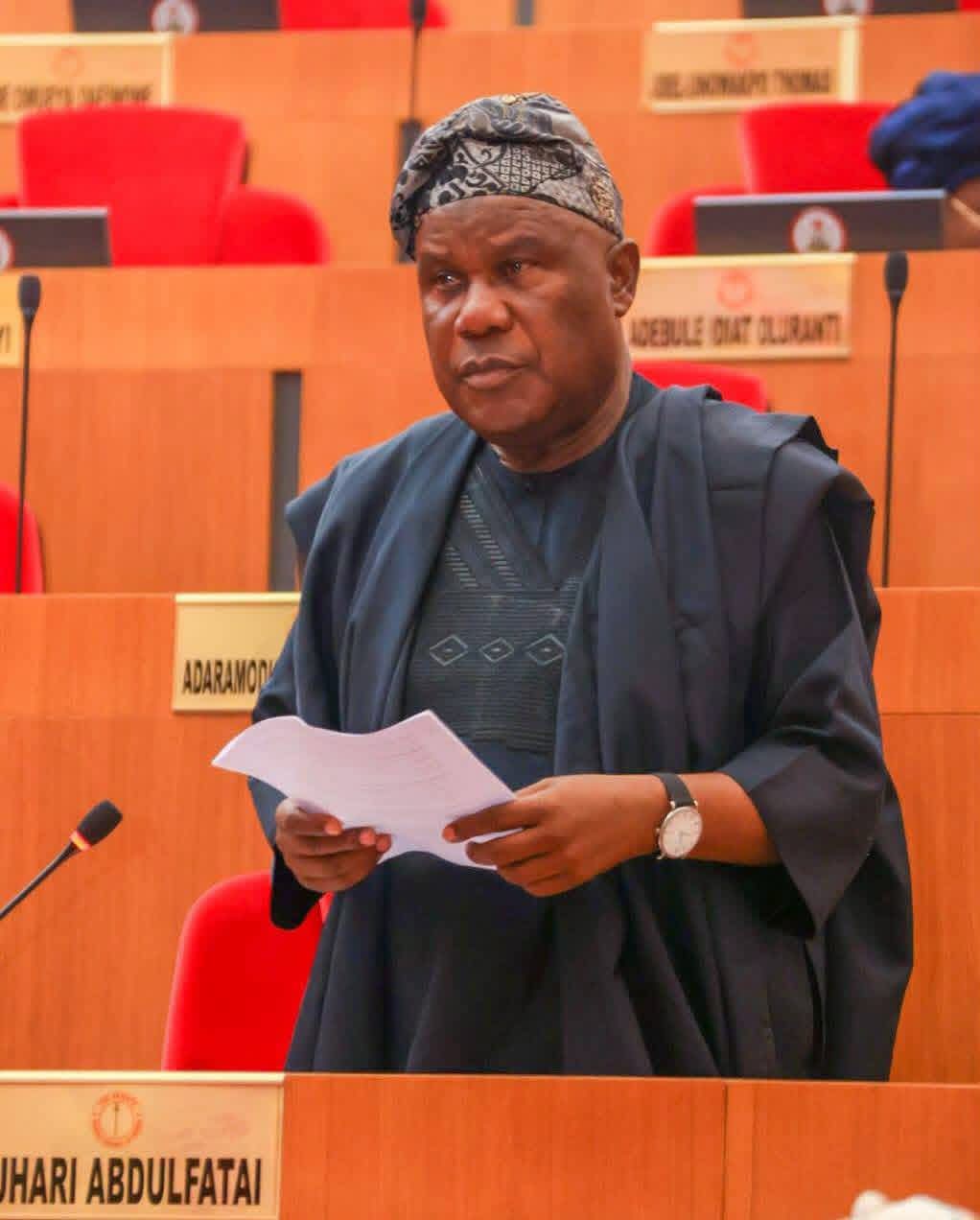
Keenness and insights would well interrogate the contributions of Abdulfatai Olatayo Buhari, Senator representing Oyo North District and one listening patriot who stayed true and through the Ori-Ire conundrum with his people. They would understand better that the synergised 56-day operation which culminated in the safe return of the Ori-Ire 44 was not at all a tea party.
But for the imperative of regular attendance and participation at plenary sittings in the National Assembly, Buhari was almost always within the precincts of Ogbomoso and Ori-Ire, the theatre of the abduction and rescue operations. I have noted in an earlier treatise that the federal government delegation which visited the distressed communities in the early weeks of the incident, met Buhari on ground, identifying the affected families and paying them at their lowest moments.
He was no newcomer to the people. They have been his constituents for the better part of the last two decades, beginning from the years he spoke for them in the House of Representatives between 2003 and 2007. Within a month of the incident, Buhari was back in Ori-Ire, to reassure his constituents that their pain were continually shared by government and that their cherished ones will return safe and sound.
Specifically, Buhari spent quality time with Lateef Oyewole Alamu, Professor of Forest Resources Management at the Ladoke Akintola University, (LAUTECH), Ogbomoso, whose wife, Rachael Folake Alamu, Principal of the Community High School, Alore-Asinle, was one of the abductees on May 15. It was an instructive encounter that the typified expert of genuine representative leadership, unlike many who disappear into the comfort and opulence of their offices, abandoning their constituents once they are voted into position.
From his desk in Abuja and his assignments at various destinations across the country, Buhari kept in touch, on an hourly basis, with his people at home, Governor Makinde, and conflict commanders on the rescue mission, ensuring progress reports. Nothing better underscores Buhari’s rootedness to Ogbomoso and environs than the kidnapping took place than the fact that the same day, Friday, July 10, 2026, when the captives were released, he was concluding a three-day training and empowerment programme for 150 of his people, in Ogbomoso.
In collaboration with the National Board for Technology Incubation, NTI, Senator Buhari initiated a series of skills reengineering programmes for women and youth beginning from last summer, and the week before which was to continue in Iseyin area, the following week. He went beyond entrusting the programme solely to consultants, opting to fully participate, in-person, even if it meant shutting his office and that of his principal aides.
ARISE NEWS ace news anchor, Charles Aniagolu, most appropriately described Buhari as “one of the strongest and most consistent voices throughout the crisis, when he spoke with firm and factual certainty.” Buhari who witnessed the regular movements of troops of various military and security formations through Ogbomoso and Oyo National Park, would have naturally understood the enormity and complexity of the nation’s security challenge.
According to him, the notorious forest axis stretching through Igbeti, Igboho, Sepeteri and Fashola, abutting the park, were effectively cordoned. There was no escape route for the criminals. Buhari’s words are corroborated by Mohammed Ngoke, a retired Assistant Director-General of the Department of State Services who said in an interview on Channels Television, that the terrorists released their victims after being surrounded by security forces who mounted severe pressure on them. That was a major part of the strategy which yielded eventual success on Friday, July 10, 2026.
Buhari, who received guests in his Ogbomoso home after the Jumat service of Friday July 10, 2026, including Professor Alamu, noted that the week from prison media adviser, Bayo Onanuga, at about 5pm of the same day conveying the news of the liberation of the Ori-Ire abductees, was one of the happiest days in his whole life. He joined in celebrating the development and drove the 109 kilometre, two-hour distance to Ibadan, the Oyo State capital, through nightfall, where he met captives who were admitted into the military hospital for assessment and immediate stabilisation.
He joined Makinde in settling in the distressed and famished compatriots, over who they had agonised through several weeks. Buhari who left the hospital at about 2am, was back again at 11am, to ascertain the convulsive joy of his people, grateful many were stable enough to have their first real meal after weeks of incarceration and malnourishment.
General Nnebeife, who doubles as the Force Commander of Operation Fasan Yamma Sector 3, an internal security operation of the Nigerian Army, spoke about the peculiarity and severity of the operation in the thick forests of the Oyo National Park. Swathes and stretches of the landscape are virtually impenetrable by sunlight. Yet by aircraft and drones, which made target acquisition difficult, and a layer of complexity to the rescue plan, this called for almost sustained and regular review of strategy to ensure that no abductee’s life was lost in the event of a firefight. With the identification and arrest of close family members of the bandits in a cross-country raid by security operatives across several states in the North, and the relaying of these realities to them, they were compelled to be as civil as possible with those they were holding.
While the kidnappers eliminated two teachers, Michael Oyedokun and John Olaleye as part of their initial effort to force government to negotiate, the security services equally lost personnel including the 28-year-old Felix Ademola, an Army lieutenant. Police Sergeant John Abena Jumaa and Army Private Sola Musa, also paid the supreme price, even as Lance Corporal Adamu Hussein is recuperating from injuries sustained during the operation. A number of the masterminds were neutralised and eight of them arrested by Nigerian security services.
For the further enlightenment of scoffers therefore, the coordinated, multi-service operation, was in no way an outdoor camp by the “boys scout movement”.
The quantum empathy he demonstrated, the sincerity of his identification with his people when they despaired the most, when their morale was at its nadir, recommended Senator Abdulfatai Buhari’s example to his colleagues, serving and prospective, and indeed everyone paid to serve our country by way of prayer. Overindulged on our commonwealth, many in his position would have sought momentary escape to the posh, plush comfort of their foreign addresses, while the heart-wrenching Ori-Ire saga lasted, distilling updates from their home-based aides. At best, such people would have stayed glued to the relative insulation of the nation’s capital, in the false name of “doing the job for which they were elected.” Buhari demonstrated practical leadership when it mattered most.
Olusunle, PhD, Fellow of the Association of Nigerian Authors (FANA), teaches creative writing at the University of Abuja.