

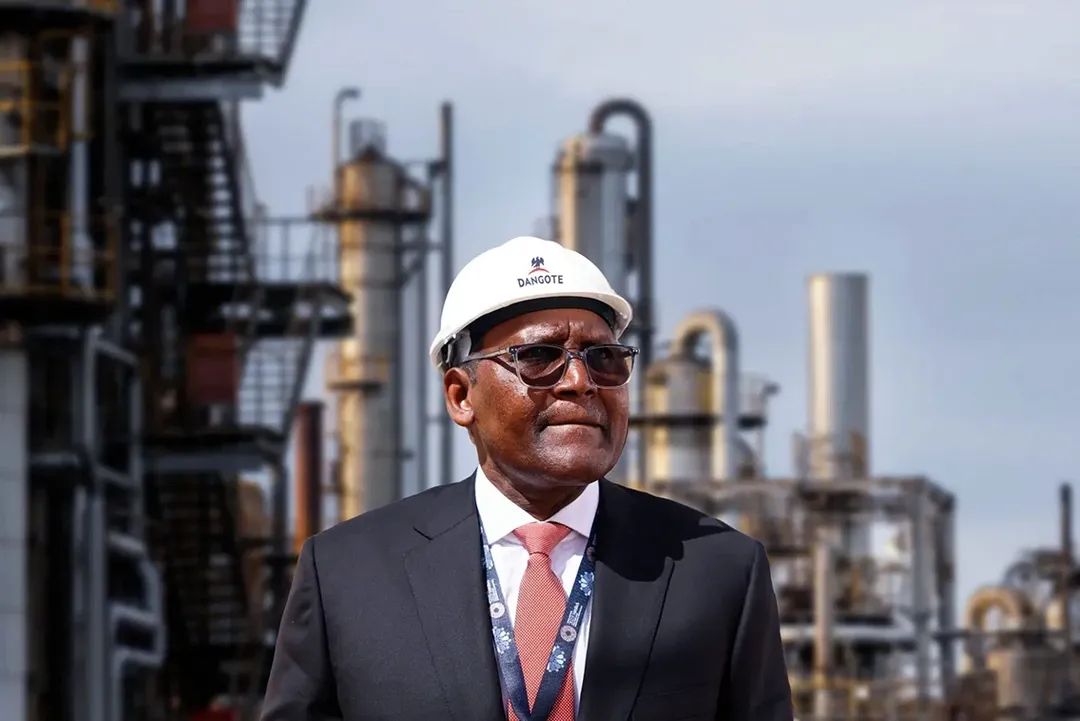
Alhaji Aliko Dangote, Africa’s richest man and President of Dangote Group, has dismissed recent estimates of his personal wealth, saying he pays little attention to wealth rankings and that his businesses are worth significantly more than such figures suggest. Dangote in an interview said wealth rankings were “very distractive”.
Alhaji Aliko Dangote, Africa’s richest man and President of Dangote Group, has dismissed recent estimates of his personal wealth, saying he pays little attention to wealth rankings and that his businesses are worth significantly more than such figures suggest.
Dangote in an interview said wealth rankings were “very distractive”, while stressing that the value of his assets could not be captured by estimates of his personal net worth.
“I don’t really look at those things, they are very distractive,” Dangote said when asked about the Forbes valuation in a viral interview conducted by the popular TikToker, School of Hard Knocks.
Daily Trust reports that Forbes currently listed $31.4bn as Dangote’s Real Time Net Worth.
However, Dangote in the interview pointed specifically to his refinery, saying the facility alone was worth more than $40 billion.
“Our refinery, I know, is worth over $40bn, just the refinery,” he said.
Dangote also referenced a Forbes estimate of his wealth, noting that most of his businesses are not yet publicly listed.
“Forbes said I am worth $38bn but most of our businesses are not listed yet,” he said.
Rather than focusing on his personal wealth, Dangote said his attention was on expanding the group’s operations and creating more value within Africa.
He disclosed that the group has set a target of generating more than $100 billion in revenue by 2030, with the business activities and value creation coming from Africa.
We have a vision in 2030 to be more than $100bn revenue, all coming out of Africa,” he said, adding that the group recorded about $10 billion in revenue in the first quarter.
Dangote said his investment philosophy was influenced by the economic transformation he witnessed in Asia, where he observed that Asians had played a major role in developing their own economies.