

Twelve state governors whose tenures will end in 2027 and early 2028 are set to leave behind a combined debt burden of about N5.3tn, comprising domestic and external obligations, findings have shown.
The affected governors are Umaru Fintiri of Adamawa, Mai Mala Buni of Yobe, Abdullahi Sule of Nasarawa, AbdulRahman AbdulRazaq of Kwara, Dapo Abiodun of Ogun, Inuwa Yahaya of Gombe, Bala Mohammed of Bauchi, Babajide Sanwo-Olu of Lagos, Babagana Zulum of Borno, Seyi Makinde of Oyo, Hope Uzodimma of Imo and Douye Diri of Bayelsa.
Data from the Debt Management Office showed that the 12 states had accumulated N2.16tn in domestic debt as of the first quarter of 2026, while their external obligations stood at about $2.33bn, based on the latest available state-level external debt data.
Most of the governors are expected to complete their second terms in 2027, while Uzodimma and Diri will remain in office until January 15 and February 14, 2028, respectively.
The debt profile of the states, however, varied significantly, with some administrations reducing their domestic or external obligations despite the overall increase in the combined debt stock.
Lagos tops debt profile
Lagos State accounted for more than half of the combined domestic debt of the 12 states, with an outstanding obligation of N1.205tn as of the first quarter of 2026.
Nasarawa recorded the lowest domestic debt at N27.15bn.
Lagos also had the highest external debt, standing at $1.174bn in the DMO’s 2025 external debt profile, while Yobe recorded the lowest at $46.67m.
The combined debt burden could rise further before the affected governors leave office if fresh borrowing is undertaken or updated debt figures reveal additional liabilities.
Makinde reduces Oyo debt
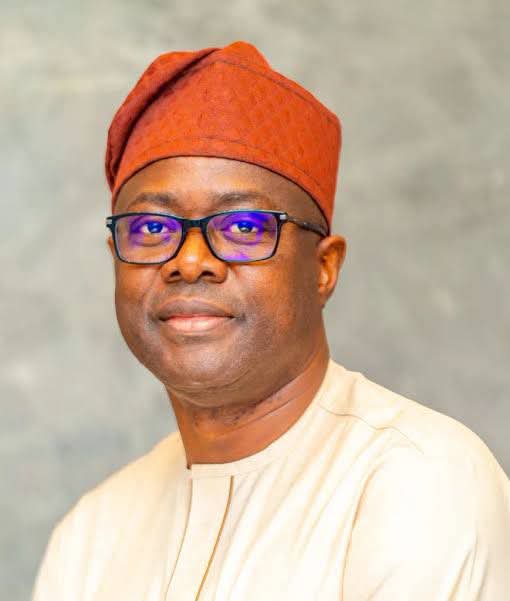
In Oyo State, Governor Seyi Makinde is expected to leave office with domestic debt of N69.8bn, representing a reduction from the N94.14bn he inherited when he assumed office.
The state’s external debt also declined from $136.531m to $87.5m under his administration.
The figures place Oyo among the states where the incumbent administration recorded reductions in both domestic and external debt obligations.
Similarly, Fintiri reduced Adamawa’s domestic debt from N95.22bn to N64.7bn, although its external debt rose from $100.614m to $124m.
In Bayelsa, Diri reduced domestic debt from N147.93bn to N50.17bn and external obligations from $59.551m to $55.5m.
Uzodimma also cut Imo’s domestic debt from N164.436bn to N81.65bn, although its external debt increased from $64.762m to $117.08m.
Mixed debt records
In contrast, Yobe’s domestic debt rose from N27.47bn to N98.60bn, while its external obligations increased from $26.911m to $46.67m under Buni.
Ogun’s domestic debt rose from N97.05bn to N200.748bn, while external debt increased from $102.154m to $217m.
Bauchi’s domestic debt climbed from N93.32bn to N154.45bn, while its external obligations rose from $133.705m to $220.6m.
In Lagos, Sanwo-Olu increased domestic debt from N542.231bn to N1.205tn, although external debt fell from $1.421bn to $1.174bn.
Kwara’s domestic debt declined marginally from N59.58bn to N56.92bn, while external obligations rose from $47.961m to $64.159m.
Gombe reduced its domestic debt from N76.895bn to N65.17bn but increased external obligations from $36.96m to $88.7m.
Experts defend productive borrowing
A Professor of Development Economics at Nnamdi Azikiwe University, Uche Nwogwugwu, said borrowing by state governments was not inherently bad if the funds were invested in productive ventures capable of generating revenue.
He identified lack of policy continuity as one of the major challenges affecting the ability of governments to derive long-term benefits from borrowed funds.
Nwogwugwu said states could reduce their debt burden by identifying productive investments and channeling borrowed funds into sectors capable of generating returns.
He cited investments in the gas sector in Imo as an example of efforts to develop alternative sources of revenue.
Similarly, a Professor of International Economics, Jonathan Aremu, said borrowing could support development if the funds were deployed into productive investments.
He warned, however, that loans used for projects with little or no economic returns could become “dead-weight debt” and place an unnecessary burden on the economy.
Aremu said infrastructure such as roads that facilitated the movement of agricultural produce to markets could qualify as productive borrowing because of its potential to stimulate economic activity.
He urged governments to consider the long-term economic impact of every borrowing decision and its ability to generate revenue, improve living standards and sustain the economy.
Meanwhile, an emerging markets analyst, Ike Ibeabuchi, warned state governments against excessive reliance on foreign loans, citing the impact of naira depreciation on the cost of servicing dollar-denominated obligations.
He noted that the naira had weakened substantially from about N465/$ in May 2023 to around N1,326/$, thereby increasing the local-currency burden of external debts.
Ibeabuchi advised governments to prioritise domestic financing or consider monetising assets where necessary to reduce exposure to foreign exchange risks.