

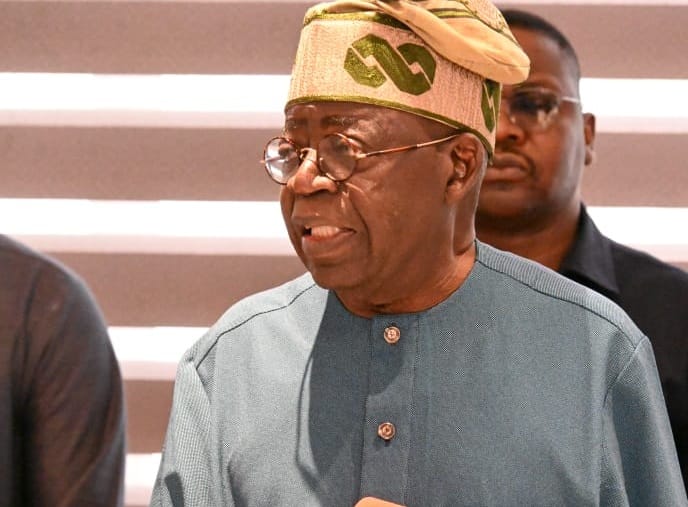
President Bola Ahmed Tinubu’s economic reforms and education policies are likely to feature prominently in the debate ahead of the 2027 general election, as his supporters highlight what they describe as the gains of his administration’s policies.
In this first instalment of the series, David Oluokun examines the removal of petrol subsidy and the introduction of the Nigerian Education Loan Fund (NELFUND), two major policy decisions of the Tinubu administration.
Subsidy Removal: A Major Economic Reform
For decades, petrol subsidy remained a major component of Nigeria’s fiscal policy, attracting concerns over its cost, transparency and impact on government revenue.
Supporters of subsidy removal argue that the policy placed a considerable burden on public finances and that the resources could be better deployed to infrastructure, education, healthcare and other critical sectors.
President Tinubu announced the removal of petrol subsidy during his inauguration on May 29, 2023, making it one of the first major policy decisions of his administration.
The decision, however, triggered a sharp increase in petrol prices and the cost of transportation and other essential goods, putting additional pressure on households and businesses.
While the Federal Government has defended the policy as necessary to reform the economy and reduce fiscal pressures, its impact on living standards remains a major issue in public discourse.
Tinubu’s supporters maintain that the increased revenue available to the three tiers of government following the removal of the subsidy has created greater opportunities for states and local governments to fund infrastructure and social programmes.
They argue that the ultimate measure of the reform will be its ability to translate increased public revenue into tangible improvements in the lives of Nigerians.
For them, the policy represents a difficult but necessary step towards addressing longstanding structural challenges in the economy.
Education: NELFUND Offers New Opportunities
Education is another area supporters of the Tinubu administration are expected to highlight in the run-up to the 2027 election.
For years, industrial disputes involving the Academic Staff Union of Universities (ASUU) disrupted academic activities in public universities, extending the duration of students’ programmes and creating uncertainty for parents and undergraduates.
The Tinubu administration has pursued engagements with university unions and other stakeholders in an effort to address industrial disputes in the education sector.
However, the claim that universities have enjoyed uninterrupted academic calendars throughout his tenure requires qualification, as the history of industrial relations in the sector remains more complex.
Another major policy initiative is the Nigerian Education Loan Fund, established under the Students Loans (Access to Higher Education) Act to provide financial assistance to eligible students in tertiary institutions.
The scheme is designed to ease the financial burden of higher education by providing loans for institutional fees, alongside upkeep support under its applicable provisions.
The initiative has attracted attention as a potential means of expanding access to tertiary education, particularly for students from low-income households who might otherwise struggle to meet the cost of their studies.
Supporters of the programme argue that financial hardship should not prevent qualified Nigerian youths from pursuing higher education.
Its long-term impact, however, will depend on effective implementation, accessibility, public awareness and the ability of beneficiaries to obtain meaningful opportunities after graduation.
2027: Policies and Performance Under Scrutiny
As the 2027 general election approaches, the Tinubu administration’s economic and educational policies are likely to remain central to discussions about its performance.
Supporters believe that the reforms initiated by the President will yield greater benefits over time and provide a basis for seeking another term in office.
Critics, on the other hand, are likely to assess the administration against the rising cost of living, employment opportunities, household welfare and the extent to which increased government revenue has translated into improved public services.
Ultimately, the electoral debate will extend beyond policy announcements to include the practical effects of those policies on the lives of Nigerians.
For Tinubu and the All Progressives Congress (APC), the challenge will be to demonstrate that the sacrifices associated with the reforms are producing measurable and widely felt benefits.
Whether these developments will translate into electoral gains in 2027 remains a question for Nigerian voters to determine.
*Watch out for Series 2.
*David Oluokun is the BSA Voice of Reason Media and RHAIN Coordinator.