

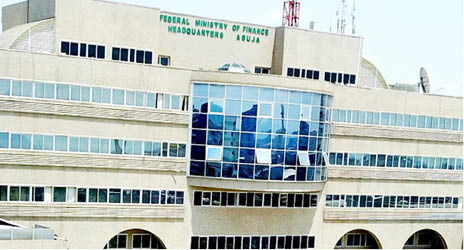
States across the federation now receive nearly triple the monthly allocations they used to get from the Federation Account, yet citizens say that instead of the windfall assuaging the economic hardship they face, the situation keeps deteriorating.
Since President Bola Ahmed Tinubu removed fuel subsidies on May 29, 2023, and floated the naira, monthly revenue shared by the Federation Account Allocation Committee (FAAC) among federal, state and local governments has risen remarkably compared to the pre-subsidy removal era. While the 36 states received a combined sum of N3.35 trillion in 2022, they got N8.19 trillion in 2025.
Kano, Lagos, Taraba, Zamfara, Kogi and Akwa Ibom states, where our correspondents interviewed dozens of residents, civil servants and traders who complained of grappling with the high cost of living, have recorded a remarkable surge in federal allocations.
Kano’s share ballooned from N99.31bn in 2022 to N279.69bn in 2025; Lagos’ rose exponentially from N161.29bn to N531.51bn; Taraba’s shot up from N51.74bn to N157.56bn; and Zamfara’s raced from N56.62bn to N167.20bn. Kogi’s allocation leaped from N60.78bn to N176.24bn, while Akwa Ibom’s rose from N314.18bn to N497.98bn.
The blockade of the oil supply channel – the Strait of Hormuz – occasioned by the ongoing war in Iran and the resultant steep jump in crude oil prices from about $70 to over $100 per barrel have further created a domino effect, fattening government coffers and inflicting more hardship on many Nigerians struggling with rising costs of fuel, food and transportation.
The Federation Account Allocation Committee (FAAC) shared a total of N2.04 trillion among federal, state and local governments in March 2026, indicating a N150 billion increase from the N1.89 trillion distributed in February.
The increase in revenue was attributed to the new tax law that expanded stamp duty and the introduction of Executive Order 9, which stopped oil companies from sending government proceeds to the Nigerian National Petroleum Company Limited (NNPCL) and the Nigerian Upstream Petroleum Regulatory Commission (NUPRC), directing them instead to remit directly into the FAAC account. The order also stopped the deduction of frontier funds, gas flaring penalties and taxes from the Federation Account.
Although the federal government, in July 2024, approved a N70,000 minimum wage, up from N30,000, with some states even paying slightly higher, civil servants lamented that inflation has eroded the purchasing power of their salaries.
Notwithstanding the strain of naira devaluation on government revenue, experts maintain that states now have more funds at their disposal than before, without commensurate impacts on people’s living standards.
The World Bank, in its Nigeria Development Update (NDU) released in April 2026, indicated that poverty in the country rose to about 140 million people in 2025, representing 63 per cent of the population. The report, titled “Nigeria’s Tomorrow Must Start Today: The Case for Early Childhood Development,” revealed that the poverty rate increased from 56 per cent in 2023 to 61 per cent in 2024.
The 2022 Multidimensional Poverty Index survey released by the National Bureau of Statistics stated that 133 million persons living in Nigeria were multidimensionally poor, lacking adequate access to healthcare, food and housing.
Kano situation
Checks by Daily Trust across parts of Kano metropolis indicate that the increase has yet to translate into tangible relief for citizens, who complained of struggling to meet basic needs.
A civil servant in the state, Musa Abdullahi, said his salary could no longer sustain his family.
“Prices of food items have doubled compared to last year. Even with the same salary, what I can buy now is far less. We hear that allocations have increased, but we are not seeing the impact,” he said.
Similarly, a petty trader at Yankaba Market, Zainab Sani, said the situation has affected both traders and customers.
“People don’t buy like before. Even we traders are struggling because the cost of goods keeps rising. Transportation and rent have also gone up,” she said.
Another resident, Ibrahim Jazuli, a commercial tricycle rider, said fuel costs and daily expenses have made it difficult to save.
“Whatever I earn goes into feeding and maintaining my tricycle. There is nothing left. Life is becoming unbearable,” he lamented.
When contacted, a senior official in the Kano State Ministry of Planning and Budget, who spoke on condition of anonymity, said the government was aware of the economic challenges and had initiated measures to mitigate the hardship.
According to the official, the state government has expanded social intervention programmes, including subsidised food distribution and support for small businesses.
“We are also investing in infrastructure and agriculture to boost local production and reduce dependency on external supplies, which contributes to high prices,” the official said.
He added that while increased FAAC allocations provide some fiscal relief, they are often offset by rising obligations and economic pressures.
We can no longer meet our needs
– Lagosians In Lagos, several residents expressed concerns over the hard times they endure, saying their incomes had been stretched so thin that they could no longer afford their basic needs, especially food staples.
A resident, Dayo Oluwa, said hikes in accommodation and food prices have strained her family’s income and forced her to make difficult dietary adjustments due to escalating costs.
“Things we used to buy easily are now too expensive,” she said.
She said her family now substitutes essential food items with cheaper alternatives in an effort to keep body and soul together.
According to her, items like meat and fish, once common in meals, have largely been replaced with eggs or ponmo (cow skin), which she described as more affordable.
“Before, N2,000 was enough to cook stew, but now I may spend N5,000 or even N10,000, and it still doesn’t feel enough,” she said.
Oluwa noted that her household also struggles with the high cost of cooking fuel, having switched from kerosene to gas, which she described as expensive.
Shamsedeen Sedio, a worker, said he now rations his spending and manages to eat twice a day.
“In the morning, I spend N1,000 and another N1,000 in the evening because of the economic situation. I have to manage my means because, as a worker, my salary is low,” he said.
However, the state governor, Babajide Sanwo-Olu, recently approved a N50,000 wage award for public workers for the month of May to cushion the effect of the rising cost of living.
‘A/Ibom govt intervention not effective’
The people of Akwa Ibom have decried the rising cost of living, saying the state government’s intervention to cushion the effect is not working.
Reacting to the harsh economic reality, Mr Isaac Job, a writer and businessman resident in Uyo, said, “The prices of foodstuffs have skyrocketed, coupled with high fuel costs.”
Job explained that the high cost of living had weakened the government’s efforts to cushion the economic effect on the people.
“The government is trying to intervene in agriculture and help small-scale businesses. Yet, it doesn’t help the system because the crisis has already escalated. To add insult to injury is the latest fuel crisis, which has made the cost of living even higher.
“The landlords are not helping matters either. They have increased rent. A two-bedroom flat for an average family, which used to cost around N300,000, now goes for as high as N700,000. All these are making life miserable,” he stated.
Job lamented that, unfortunately, Nigerians’ incomes have remained the same while they struggle with the rising cost of goods and services.
“The so-called minimum wage that the government said they would pay is only within government circles. The private sector is not implementing it, including several media organisations. So it’s not feasible.
“By the time the government announces a minimum wage, market traders, landlords and everyone else increase the prices of commodities and services. While income remains fixed, prices of goods and services keep rising every day,” he said.
Narrating how he struggles to make ends meet, Uko Etim, a young university graduate, said it has been a challenge to fend for himself and other members of his family.
He said, “Prices of commodities are rising every other day. Today, you go to the market to buy, for instance, rice at a particular price, and tomorrow they attribute the new price to petrol.
“The cost of living is really high and it’s affecting many families. I have people depending on me who are also feeling the brunt of it,” he stated.
Speaking on the high cost of transportation, Uko said, “Before now, I used to pay between N200 and N300 to get to my workplace, but now it costs me N600. Despite the increasing costs of goods and transportation, there is no increase in income.
“We are dealing with a situation where policymakers are not paying adequate attention to the plight of citizens. They should formulate good policies with the political will to ensure they work.”
Taraba residents decry worsening poverty
Residents of Jalingo, the Taraba State capital, also decried worsening poverty and the high cost of living, which they said has made life very difficult. Some of the residents interviewed said they could no longer afford basic necessities.
Habibu Tela, a tailor, said he could hardly afford three square meals a day due to low patronage and shrinking income, adding that people are now more concerned with feeding themselves and their families than buying new clothes.
“I have one wife and two children, but I can hardly afford three square meals a day because of poor patronage,” he said.
A shop owner at Jalingo Main Market, Adamu Abubakar, said there is little money in the hands of low-income earners in the state, and that this has affected the purchasing power of most people.
He alleged that a poverty reduction programme run by the state government benefits only a few individuals close to the government, while the majority of residents wallow in abject poverty without government support.
A university lecturer, Dr Lawal Adamu, said the people are not benefitting from the increase in federal allocations to the state government. According to him, civil servants are not paid on time, and it has become a practice for the state government to obtain overdrafts from commercial banks to pay salaries despite “the huge statutory allocation the government is receiving from the Federation Account monthly.”
Another civil servant, Mr Gabriel Victor, lamented that apart from delays in salary payments, the government had not rolled out any programme to reduce the suffering of civil servants and other categories of people.
Saidu Haruna said most businesses are collapsing in Jalingo, forcing many residents to relocate elsewhere to eke out a living. He noted that the state government had not embarked on enough developmental projects that would create business opportunities for residents.
Asked what the government is doing to alleviate poverty in the state, the Senior Special Adviser on Digital Communication to Governor Agbu Kefas, Mr Emmanuel Bello, referred our reporter to the Special Adviser on Palliatives, Sale Saad, and the Commissioner for Special Duties, Mr Saviour Noku, for comments.
However, Saad could not be reached, as he neither answered phone calls nor responded to text messages. Noku, when contacted, asked our correspondent to call back but did not pick subsequent calls.
Meanwhile, a senior government official, who preferred to remain anonymous, disclosed that Governor Kefas recently approved over N1 billion for the payment of WAEC registration fees for all final-year secondary school students across the 16 local government areas of the state.
The official added that the government has also reduced tuition fees by 50 per cent for students in the state-owned university and other tertiary institutions, in addition to introducing free primary and secondary education.
The source added that these and other initiatives were implemented to alleviate the hardship faced by residents of the state.
Hardship continues in Zamfara
In Zamfara State, a civil servant, Malam Nasiru, said that the average worker in the state is struggling to provide for their immediate family.
“Civil servants at my level are struggling to feed our families because the cost of living is increasing every day. Recently, rainfall destroyed my fence and when I went to buy a bag of cement, the price was N12,000. I had no option but to resort to using a temporary covering made from used cement bags to shield my house,” he said.
Habibu, who doubles as a farmer, lamented that insecurity has compounded the economic hardship.
“I used to farm before banditry became very serious. We ate from my harvest while my salary was used for my children’s school fees and health expenses, among other things,” he added.
Efforts to hear from the state government on measures being taken to address the situation proved abortive.
Coping with rising cost of living in Kogi
A cross-section of residents who spoke to Daily Trust said they are feeling the impact of the economic hardship through the steady rise in prices of goods and services.
They noted that the recent increase in the pump price of petrol had worsened the living conditions of civil servants, motorists, shop owners, petty traders and farmers, among others.
“Some workers now go to the office occasionally, some twice or thrice a week. Some resume work and leave shortly after in search of something to do to augment their income or solve immediate needs,” a director in one of the state’s ministries confided in Daily Trust.
Several workers were said to have taken to commercial transportation, building construction and farming to supplement their incomes.
“My neighbour, a civil servant, recently bought a tricycle on hire purchase. He is always on the road with it, carrying passengers,” said a resident of Lokoja.
Motorists complained of low patronage due to the hardship, saying few people now travel.
One of them, Usman Abubakar of Lokoja-Ganaja Park, said, “The increase in the pump price of petrol has worsened the situation. We have temporarily overhauled the schedules of the routes we ply to cope with the situation.”
Mrs Shade Abdullahi, a resident of Lokoja, said, “These days, it is not what my family wants to eat that I buy, but what I can afford to keep us going. My husband has virtually cancelled lunch.”
But a permanent secretary, who spoke on condition of anonymity, said the economy of the state largely thrives on workers’ salaries, stressing that the government ensures prompt payment to reduce hardship.
“Recognising that Kogi State’s economic activities largely depend on workers’ salaries, Governor Usman Ododo ensures prompt payment of salaries, harmonisation of pensions, inclusion of pensioners in the state health insurance scheme, and promotions with cash backing.
“The Kogi government, through KEDA, also distributed ICT tools to over 300 entrepreneurs across the 21 LGAs. The state also implements free education policies, including payment of WAEC fees for students in public schools and scholarships for students in tertiary institutions. These initiatives are aimed at easing financial pressures on workers and residents, while also stimulating economic activities.”
Analysts demand govt transparency
Prof. Adeola Adenikinju, President of the Nigerian Economic Society, noted that the subsidy removal had increased revenues, stressing the need to scrutinise states’ expenditures to ensure transparency and effective utilisation.
He said, “When you remove subsidy, you are supposed to take care of the poor and vulnerable, but are we doing that now? Poverty has increased, and unemployment is also on the high side. In what way have we been able to mitigate the effects of subsidy removal? I think that is the question we should be asking.
“People are worried that state governments are not spending enough; some are not injecting enough into the system, and even at the federal level, there is so much baggage, avoidable spending and unnecessary expenditure on travel. These are issues government should be very concerned about.”
A public analyst in Kano, Musa Sufyan, said there is a disconnect between increased allocations and the living conditions of the people. He called for transparency and targeted spending to ensure that the funds directly impact citizens.
“The issue is not just about how much money comes in, but how effectively it is utilised. There is also the broader national economic environment, including inflation and currency challenges, which states alone cannot control,” he added.
A civil society advocate, Amina Bello, called for greater accountability in the use of public funds.
“People expect to see improvements in their daily lives when allocations increase. Governments must prioritise welfare, job creation and price stabilisation measures,” she said.
She urged state governments to strengthen monitoring mechanisms and engage citizens in budget implementation processes.
Moshood Oshunfurewa Adebola, a member of the Youth Rights Campaign, noted that palliatives introduced by the government following fuel subsidy removal were either insufficient or lost to corruption.
“Basic staples like rice, bread and beans have become luxuries for millions. Electricity tariffs soared alongside fuel prices, yet power supply remains abysmal. The naira’s free fall — losing over 70 per cent of its value — has made imports punishing. Meanwhile, the minimum wage lags far behind reality.
“Families now skip meals and small businesses collapse. Government reforms lack a human face, leaving ordinary Nigerians to bear the highest cost alone,” he said.