

By Salam Saheed
The Executive Chairman of Irepo LG, Hon. Tunde Taoheed Olayiwola, has identified security and education as critical pillars of sustainable development, saying no meaningful socio-economic progress can be achieved without adequate protection of lives and investment in human capital.
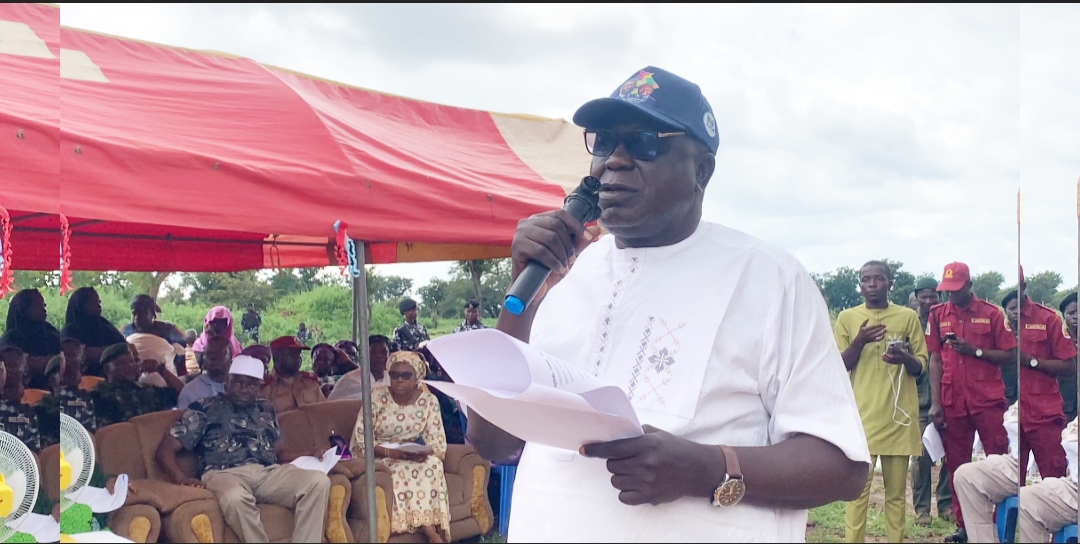
He stated this on Sunday in Kishi during the commissioning of a number of projects executed by his administration as part of activities tagged “A Day of Impact – A Journey of Development.”
The projects included an Amotekun security outpost at Sabon Gari Madina, a renovated police post at Adagbangba and blocks of three classrooms each at Kraal and Budonla.
The council boss said the projects reflected his administration’s resolve to translate governance into tangible benefits for residents, particularly in areas with direct impact on their welfare and security.
He said, “Our administration is committed to delivering meaningful and sustainable dividends of democracy to the people of Irepo Local Government. We firmly believe that government must not only exist in offices but must be felt in communities.”
He said the construction of the Amotekun outpost at Sabon Gari Madina was informed by the need to strengthen the presence of security personnel in the community and facilitate rapid response to security challenges.
He said, “Security remains one of the fundamental requirements for meaningful development. No community can achieve its full economic and social potential in an atmosphere of insecurity.”
According to him, the renovated police post at Adagbangba was part of the council’s efforts to provide security agencies with a more conducive environment to discharge their responsibilities effectively.
He added that the council would continue to collaborate with the Oyo State Government, security agencies, traditional institutions, community leaders and residents towards maintaining peace and protecting lives and property across Irepo.
Turning to education, the chairman said his administration considered investment in schools as an investment in the future of the local government, noting that conducive learning environments were essential to producing responsible citizens.
He said the construction of the three-classroom block at Kraal and another at Budonla was an intervention designed to improve access to quality education and enhance teaching and learning.
Olayiwola stated, “Education remains one of the strongest foundations upon which the future of our society is built. These classroom projects are investments in our children and in the future of Irepo Local Government.”
He appealed to the benefiting communities to take ownership of the projects, protect the facilities from vandalism and ensure their proper maintenance.
The chairman stressed that the commissioning of the projects should not be regarded as the culmination of his administration’s development agenda, but as another step in its effort to address the needs of residents.
He said, “The commissioning of these projects should not be regarded as the conclusion of our development efforts. Rather, it is another step in our continuous journey towards building a more secure, educated, prosperous and inclusive Irepo Local Government.”
Olayiwola expressed appreciation to the Oyo State Governor, Engr. Seyi Makinde, for supporting grassroots development, as well as the Deputy Governor, Barrister Abdul-Raheem Adebayo Lawal, for commissioning the projects.
He also commended members of the local government legislative council, heads of departments, traditional rulers, community leaders, security agencies and council workers for their contributions to the successful completion of the projects.
The chairman said the administration would continue to identify pressing needs across the local government and channel available resources towards projects with direct and sustainable benefits to the people.
He added, “Today we celebrate not merely buildings and physical structures, but the opportunities, security and hope that these projects represent.”
The commissioning ceremony was attended by the Deputy Governor, members of the State Executive Council, traditional rulers, community leaders, security personnel, political stakeholders and officials of the local government.