
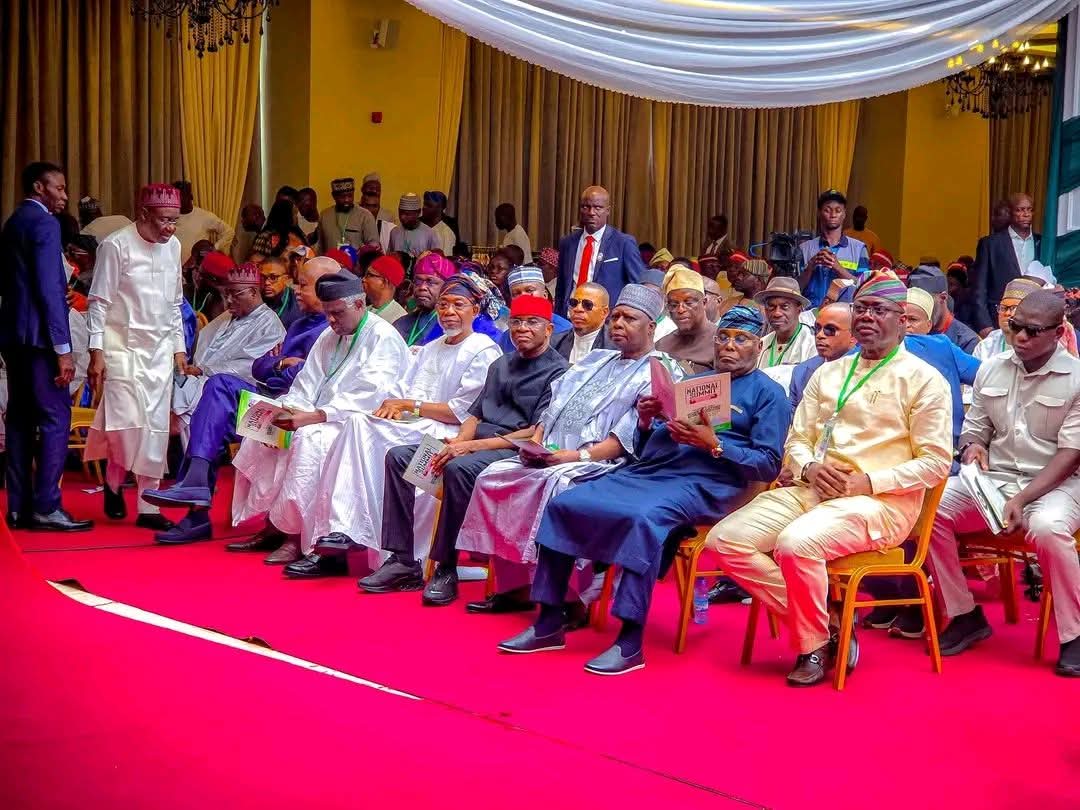
In a bold attempt to reshape Nigeria’s political landscape ahead of the 2027 general elections, opposition parties on Saturday resolved to unite behind a single presidential candidate, marking what analysts describe as one of the most ambitious coalition efforts in recent years.
The decision was announced in a communiqué issued after a National Summit of opposition leaders held in Ibadan, where participants voiced deep concern over what they called growing threats to democratic governance under the ruling All Progressives Congress (APC).
The parties accused the administration of President Bola Tinubu of consolidating power in ways that could weaken multiparty democracy. They pledged to resist any attempt to transform Nigeria into a one-party state and affirmed their determination to challenge the ruling party at the polls.
Central to their resolution is a plan to negotiate and endorse a consensus presidential candidate for the 2027 election , a strategy aimed at avoiding vote-splitting among opposition blocs, which has historically benefited incumbents.
“We shall work towards fielding one presidential candidate agreed and supported by all participating opposition parties,” the communiqué stated, emphasizing the urgency of collective action to “rescue the nation.”
Beyond electoral strategy, the summit also raised institutional concerns, particularly about the leadership of the Independent National Electoral Commission (INEC). The opposition called for the removal of its chairman, Prof. Joash Ojo Amupitan, alleging partisanship and a loss of public confidence in his ability to oversee credible elections.
The parties further urged the National Assembly to amend contentious provisions of the Electoral Act 2026, warning that certain clauses could undermine transparency and constitutional integrity. They also demanded an extension of the deadline for party primaries to the end of July 2026, citing what they described as restrictive guidelines issued by the electoral body.
In a broader appeal, the opposition called for the release of politicians allegedly detained on bailable offences, arguing that such actions threaten political inclusion and civil liberties.
The summit commended Nigerians for their resilience amid economic and political pressures, and expressed gratitude to Seyi Makinde and the people of Oyo State for hosting the gathering.
While previous coalition attempts have faltered due to internal divisions, political observers note that the stakes ahead of 2027 may compel opposition leaders to sustain unity this time. Whether the alliance can translate its rhetoric into a cohesive electoral force remains a key question in the months ahead.